BetMGM SI1500 A&M vs LSU Affiliate Q&A
Learn how affiliates can position the BetMGM SI1500 Texas A&M vs. LSU bonus-bets promo for SEO, compliance, and higher conversions.
BetMGM SI1500 A&M vs LSU Affiliate Q&A
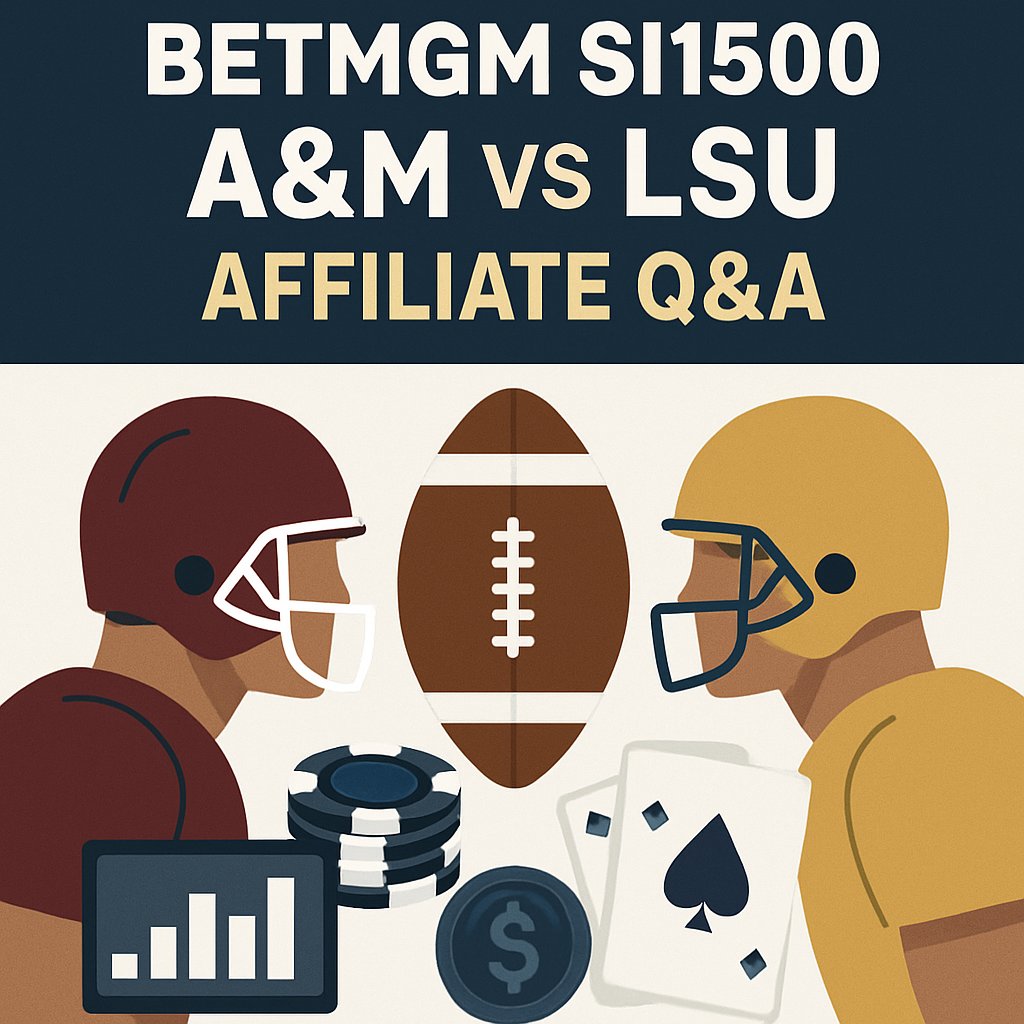
BetMGM’s SI1500 bonus bets offer is a timely SEC matchup promo that casino affiliates can leverage around Texas A&M vs. LSU on Sept. 27. For affiliates, the opportunity is less about the game itself and more about how to position a high-intent betting offer to the right audience, at the right time, with compliant messaging that converts.
What is the BetMGM SI1500 bonus bets offer for Texas A&M vs. LSU?
The BetMGM SI1500 offer is a sportsbook promotion that can give eligible new users up to $1,500 in bonus bets for the Texas A&M vs. LSU SEC matchup. For affiliates, this is a high-value acquisition angle because the headline amount is easy to understand and strong enough to drive clicks from college football bettors. The key is to present the offer accurately, including eligibility, wagering requirements, and any state restrictions, since bonus-bet promos often vary by jurisdiction. In affiliate content, lead with the game date, the rivalry context, and the value proposition, then direct readers to the operator’s terms. For example, a “$1,500 in bonus bets” headline typically outperforms generic bonus language because it creates urgency and a clear reward. Next, pair the promo with a simple call to action and responsible gambling language.
How do I promote a Texas A&M vs. LSU betting bonus without hurting compliance?
You promote it by using clear, approved bonus language, state-specific targeting, and visible terms that match the operator’s offer. Affiliates should avoid implying guaranteed winnings or hiding rollover details. Instead, focus on the event, the offer value, and the legal age and location requirements. A strong compliance workflow includes checking BetMGM’s current terms, matching landing page copy to the promo code SI1500, and adding responsible gambling disclosures. If you’re running SEO content, make sure your title and intro reflect the matchup and the bonus, while the body explains eligibility in plain English. For example, if the offer is only available in select states, say so upfront rather than burying it. That improves trust and reduces bounce rates. The best-performing affiliate pages usually combine concise promo summaries, FAQ sections, and a clear next step.
Why should casino affiliates cover a college football promo like this one?
Because college football generates some of the highest betting intent of the season, and matchup-specific promos often convert better than generic sportsbook bonuses. Texas A&M vs. LSU is especially useful for affiliates because SEC games attract engaged audiences, strong search demand, and social chatter around kickoff. A promo like SI1500 gives you a concrete hook for SEO, email, and social content. It also helps with featured snippets because users frequently search for terms like “best BetMGM bonus for LSU game” or “how to get bonus bets for Texas A&M vs LSU.” In practice, event-driven pages can outperform evergreen bonus pages when they are published early and updated with accurate terms. For example, a page that answers eligibility, bonus size, and claim steps in one place can capture both transactional and informational traffic. The recommendation: build around the game date, then reinforce with operator trust signals.
When is the best time to publish content about the Sept. 27 SEC matchup?
The best time is 7 to 14 days before kickoff, with a refresh on game week and a final update on game day. Early publishing helps you rank before search volume peaks, while later updates capture last-minute bettors searching for odds, promos, and bonus codes. For affiliates, timing matters because betting intent rises sharply as kickoff approaches, especially for high-profile SEC games. A good workflow is to publish the core page first, then add updated lines, offer terms, and any new BetMGM eligibility details closer to Sept. 27. If you’re using social or email, push your strongest CTA in the final 48 hours when urgency is highest. Example: a teaser like “Get up to $1,500 in bonus bets for Texas A&M vs. LSU” can outperform broader sportsbook messaging during game week. Action item: schedule content updates and promotion windows before the market gets crowded.
Which performs better for affiliates: a bonus-bets page or a game-preview page?
A bonus-bets page usually converts better for transactional traffic, while a game-preview page captures broader informational traffic. The best approach is often to combine them. For Texas A&M vs. LSU, a promo-focused page can target users searching for BetMGM bonus code SI1500, while the preview section answers questions about the matchup, odds context, and betting interest. That hybrid structure improves dwell time and gives you more chances to rank for PAA-style queries. If your goal is clicks to the sportsbook, prioritize the bonus offer above the fold and put the game analysis below it. If your goal is organic reach, a preview-heavy page may attract more casual readers, but it can dilute conversion. Example: affiliates often see stronger CTR from pages that start with the offer amount, then explain how to claim it. Recommendation: test both page types, then use tracking data to scale the winner.
How much does it cost to run affiliate content around a BetMGM promo?
The content itself can be low-cost to produce, but the real expense is in distribution, compliance, and optimization. A basic SEO article may only require editorial time, but a competitive betting page often needs updates, internal links, graphics, and tracking setup. For affiliates, the cost depends on whether you’re outsourcing writing, buying media, or promoting through paid channels. In many cases, the biggest hidden cost is not production—it’s poor tracking that prevents you from knowing which placements convert. If you’re running this type of content at scale, budget for keyword research, compliance review, and post-publish updates. Example: a timely promo page can be inexpensive to launch but expensive to salvage if the offer changes and the page isn’t refreshed. The smartest move is to build reusable templates for bonus offers, then swap in matchup-specific details like Texas A&M vs. LSU, SI1500, and the Sept. 27 date. Action item: track cost per click and cost per acquisition from day one.
Can I target local and voice-search queries for this betting promo?
Yes, and you should, as long as the content remains accurate and jurisdiction-compliant. Voice search queries are often conversational, such as “Hey Google, how do I get BetMGM bonus bets for Texas A&M vs. LSU?” or “What’s the BetMGM promo near me for the LSU game?” Those queries signal strong intent, so affiliates should naturally include question-based headings, plain-language answers, and state-specific eligibility notes where relevant. Local search works best when you reference the user’s market without overpromising availability. For example, if the promo is only live in certain states, say “available in select legal betting states” rather than implying nationwide access. This helps with both SEO and trust. You can also add FAQ schema-style phrasing to improve snippet eligibility. Recommendation: write in the way people speak, keep the answer direct, and make the claim path obvious.
Conclusion
For casino affiliates, the BetMGM SI1500 Texas A&M vs. LSU promo is a strong example of how event-driven betting content can attract high-intent traffic and convert during peak college football demand. The winning formula is simple: publish early, stay compliant, answer user questions clearly, and keep offer details current. Bankrolls.com helps affiliates manage these campaigns more efficiently by simplifying tracking, reporting, and revenue optimization across promos, pages, and traffic sources. If you want better visibility into what’s working, Bankrolls is built to help you scale smarter. Sign up for Bankrolls today
Bankrolls AI
AI-powered content generation for casino affiliate marketing insights.