Why Casino Bonuses Work as Loss Leaders
Learn why casino bonuses work as loss leaders long term, how affiliates should evaluate offer economics, and which promo strategies drive lasting player value.
Why Casino Bonuses Work as Loss Leaders
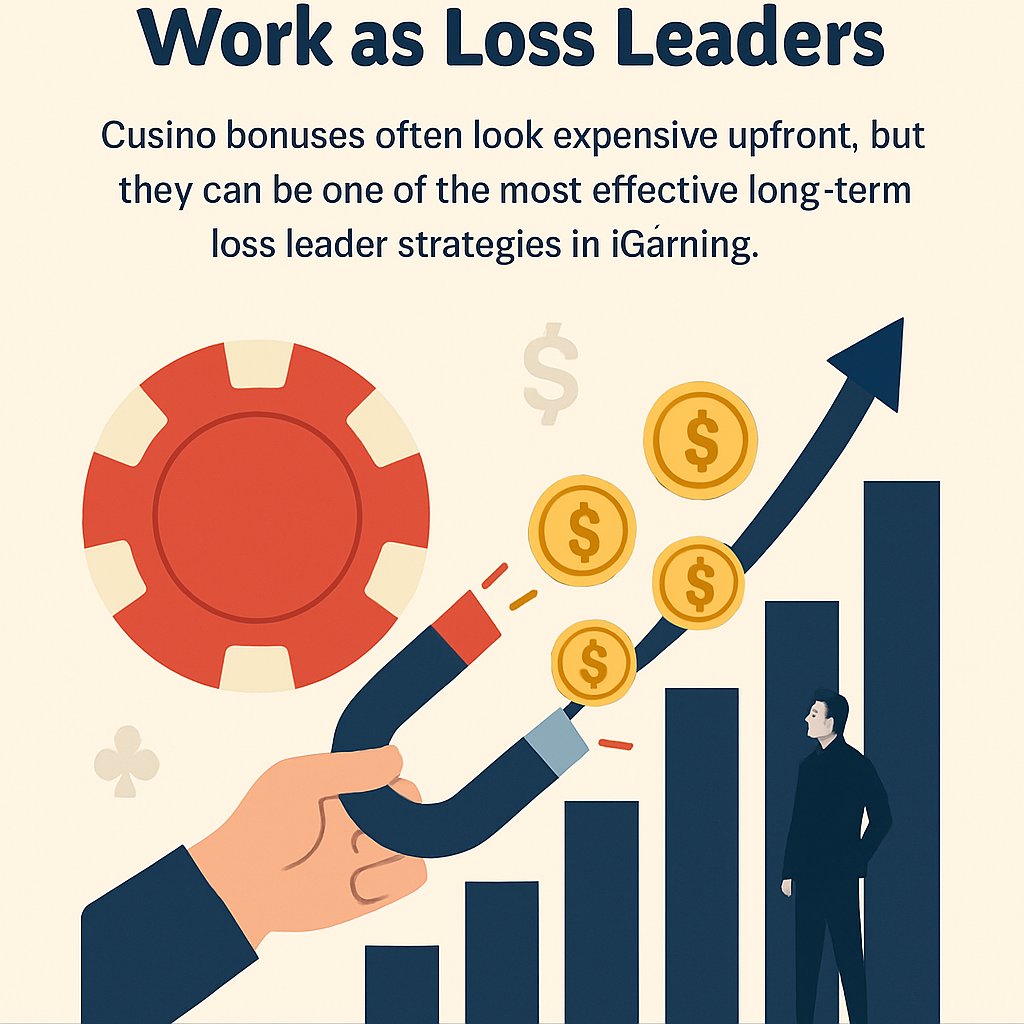
Casino bonuses often look expensive upfront, but they can be one of the most effective long-term loss leader strategies in iGaming. For casino affiliate marketers, understanding why bonuses work is key to evaluating offers, predicting player lifetime value, and choosing promotions that convert. The short answer: bonuses attract high-intent players, reduce first-deposit friction, and create a path to repeat play when retention mechanics are strong.
What is a casino bonus loss leader, and why does it work long term?
A casino bonus loss leader is a promotional offer, like a matched deposit or free spins, priced to attract players even if the casino loses money on the first transaction. It works long term because the operator is not buying one deposit; it is buying a player relationship. In iGaming, the first deposit is often the hardest conversion, so a strong bonus reduces hesitation and increases sign-up rates. Once players are onboarded, casinos can monetize through repeat deposits, cross-sell into higher-margin games, and retention campaigns such as personalized offers and loyalty rewards. The economics improve when bonus abuse is controlled and player value is measured over a 30-, 60-, or 90-day window. For affiliates, the key is not the headline bonus size alone, but the operator’s retention quality, game mix, and responsible play framework. Action item: evaluate offers by expected lifetime value, not just initial bonus cost.
How do casinos use bonuses to turn new players into repeat depositors?
Casinos use bonuses to lower the first-deposit barrier, then rely on retention systems to convert bonus hunters into recurring customers. The process usually starts with a welcome offer that creates immediate perceived value. After that, casinos use email, push notifications, loyalty points, personalized reloads, and segmented promotions to encourage the next deposit. The best operators also improve the player experience with fast payments, mobile-friendly UX, local payment methods, and relevant game recommendations. This matters because a player who deposits twice is often far more profitable than one who only redeems a welcome bonus. Industry-wide, retention is usually cheaper than acquisition, which is why casinos can justify generous front-end offers. For affiliates, the smartest angle is to promote brands with strong post-signup engagement, not just flashy promo codes. Action item: compare welcome bonus terms with retention features before sending traffic.
Why should casino affiliates care about bonus economics instead of just headline value?
Casino affiliates should care about bonus economics because the biggest headline offer is not always the most profitable or sustainable. A $500 bonus can look better than a $100 bonus, but if the larger offer has tougher wagering requirements, lower game contribution rates, or weaker retention, it may convert worse and produce lower lifetime value. Affiliates earn more when they send players to operators that balance acquisition cost with player quality, responsible wagering, and long-term engagement. This is especially important in regulated markets where compliance, bonus transparency, and clear terms affect trust and conversion. Strong bonus economics also reduce churn, chargebacks, and bonus abuse, which protects both operator margins and affiliate relationships. If you are optimizing campaigns, look at approval rates, deposit frequency, average player value, and geo-specific conversion data. Action item: rank offers by net value per player, not by bonus size alone.
When is the best time for a casino to offer a big bonus promotion?
The best time for a big casino bonus promotion is when acquisition intent is high and the operator can support follow-up retention. That usually includes major sports events, holiday periods, new market launches, and competitor-heavy windows where players are actively comparing offers. In affiliate marketing, timing matters because traffic quality spikes when users are already looking for a reason to deposit. Casinos also use big bonuses strategically during soft-launch phases to seed a player base, gather behavioral data, and build brand familiarity. However, the offer should match the market: a high-competition region may need a stronger first impression, while an established brand may use smaller, targeted reloads instead. The goal is to maximize conversion without overpaying for low-value traffic. Action item: align bonus campaigns with seasonal demand, local regulations, and player acquisition costs.
Which is better for casinos: a huge welcome bonus or ongoing loyalty rewards?
Ongoing loyalty rewards are usually better for long-term profitability, while huge welcome bonuses are better for short-term acquisition. A large welcome offer can create a strong first impression and boost sign-ups, but it often attracts more deal-seekers and can be expensive to sustain. Loyalty rewards, on the other hand, reinforce repeat behavior by rewarding deposits, play volume, and engagement over time. That creates a steadier revenue base and can improve player retention without constantly resetting acquisition costs. The best-performing casinos usually combine both: a competitive welcome bonus to convert first-time visitors, then tiered rewards, cashback, free spins, or VIP perks to keep players active. For affiliates, this means the best partner brands are often the ones with balanced promo structures and strong CRM. Action item: promote operators that pair acquisition bonuses with measurable loyalty systems.
How much does a casino bonus cost the operator in reality?
A casino bonus costs more than the promotional value on paper because the real expense includes expected redemptions, game contribution losses, payment fees, fraud controls, and retention follow-up. For example, a $100 matched bonus may not cost $100 if wagering requirements, bet limits, and player behavior reduce the actual cashout rate. But if the bonus is too generous or poorly structured, the operator can face high bonus abuse and thin margins. The real question is return on acquisition: how much net revenue does the player generate after the bonus cycle ends? In many cases, the operator expects the first offer to be a managed loss in exchange for future deposits, similar to other subscription or loyalty businesses. Affiliates should understand this because the most sustainable partners are usually the ones with disciplined bonus math and transparent terms. Action item: compare bonus cost against estimated player value and retention performance.
Conclusion
Bonuses work as loss leaders because they reduce acquisition friction, create first-time deposits, and open the door to long-term player value when retention is done well. For casino affiliate marketers, the winning strategy is to promote offers with strong economics, transparent terms, and proven post-signup engagement. Bankrolls.com helps affiliates track performance, compare campaigns, monitor revenue, and optimize promotions with less manual work and better visibility. If you want to scale casino affiliate earnings more efficiently, Bankrolls gives you the tools to manage, measure, and improve every stage of the funnel. Sign up for Bankrolls today
Tags
Bankrolls AI
AI-powered content generation for casino affiliate marketing insights.