GBank Q1 2026 Results: Affiliate Takeaways
GBank’s Q1 2026 results may signal payment stability, compliance shifts, and affiliate risk. Learn what casino marketers should watch and how to respond.
GBank Q1 2026 Results: Affiliate Takeaways
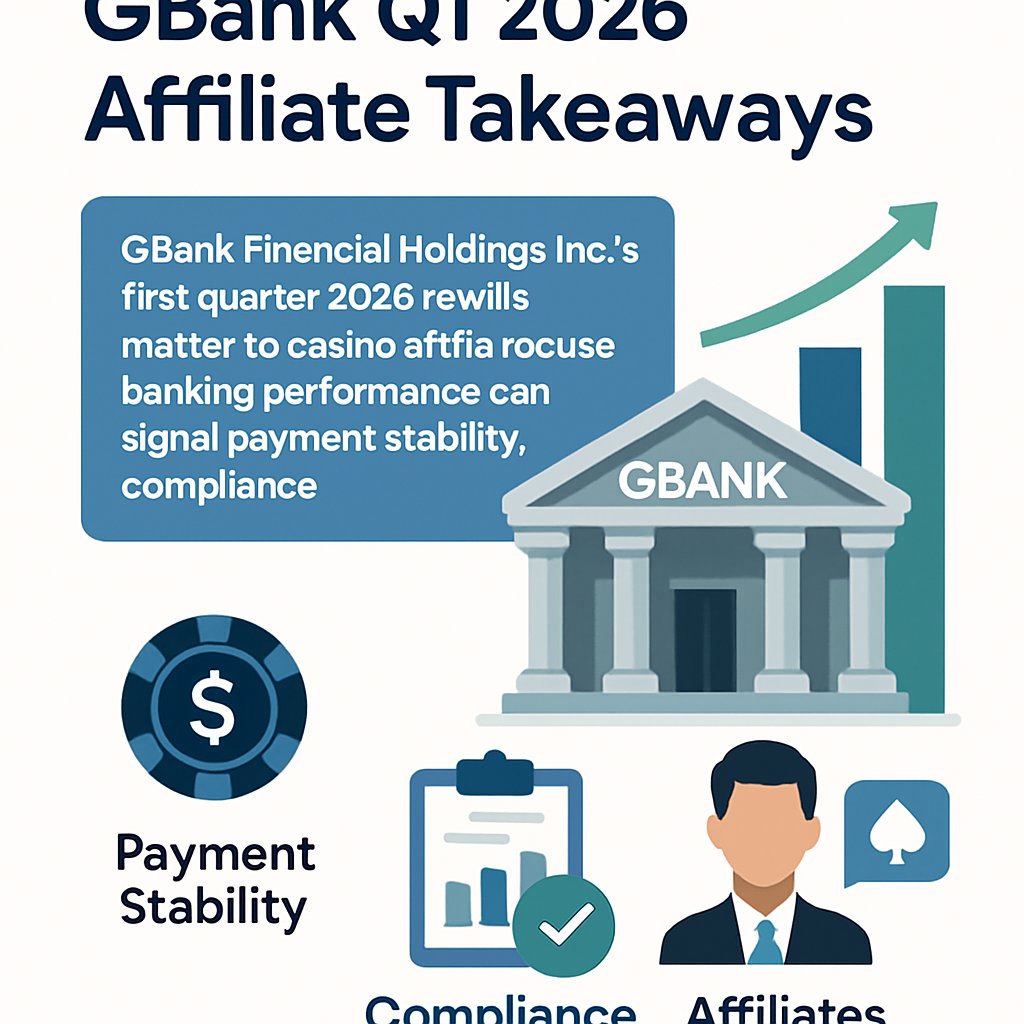
GBank Financial Holdings Inc.'s first quarter 2026 results matter to casino affiliates because banking performance can signal payment stability, compliance pressure, and partner reliability. For affiliates promoting casino brands, understanding how a financial institution is performing helps you anticipate deposit-flow changes, messaging risks, and conversion opportunities. Here’s what casino affiliates need to know, with practical takeaways for campaign planning and risk management.
What do GBank Financial Holdings Inc. first quarter 2026 results mean for casino affiliates?
GBank’s Q1 2026 results can indicate how stable its banking relationships, payment operations, and compliance posture may be for gaming-adjacent businesses. For casino affiliates, that matters because a bank’s financial health often affects merchant processing, account approvals, and the reliability of player deposit flows. If revenue, deposits, or fee income improved, it may suggest stronger operational confidence. If margins tightened or credit risk rose, affiliates should watch for slower onboarding, stricter underwriting, or more conservative payment policies. In practice, affiliates should not treat earnings alone as a green light, but as a signal to review partner exposure. For example, a bank servicing high-risk verticals may tighten terms after a weak quarter, affecting conversion rates and approval speed. The best next step is to monitor public filings, payment notices, and partner communications before scaling campaigns.
How do I assess whether GBank's financial results affect my casino affiliate campaigns?
Start by linking the earnings report to the parts of your funnel that depend on banking performance: deposit success, approval rates, and player retention after first deposit. Look for changes in net interest income, noninterest income, charge-offs, and management commentary on risk controls. Those details can hint at whether the bank is becoming more conservative with gaming-related traffic. Then compare your own campaign data week over week: if deposit conversion drops while clicks stay steady, the issue may be payment friction rather than traffic quality. Affiliates should also watch for changes in supported payment methods, KYC timing, and geo-restrictions. For example, if a bank signals tighter compliance, you may need to shift ad copy toward faster payout messaging or alternative cashier options. Use the earnings report as a diagnostic tool, not a standalone decision-maker.
Why should I care about GBank's compliance and risk language in the 2026 report?
Because compliance language often reveals how a bank plans to handle higher-risk sectors, including gaming and affiliate-driven traffic. If GBank mentions enhanced monitoring, stricter onboarding, or elevated regulatory scrutiny, that can translate into slower account setup, more document requests, and tighter transaction review. For casino affiliates, those changes can lower conversion if not anticipated. Compliance updates also matter for ad messaging: claims about instant deposits or guaranteed approval may become riskier if the bank is under pressure. A practical example is a partner that previously approved players in minutes but now requires manual verification; that can increase abandonment at the cashier. Affiliates should align landing pages with realistic timelines and transparent payment disclosures. Review the report’s risk factors, then update your compliance checklist and creative to match current banking conditions.
When is the best time to adjust casino affiliate promotions after a bank earnings release?
The best time is immediately after you review the earnings call, 10-Q, and any payment-partner updates, but before you scale spend. That gives you time to react to changes in guidance, liquidity, or compliance posture. If the report suggests stability, you can test more aggressive deposit-focused messaging. If it suggests caution, reduce spend on high-intent campaigns until you confirm conversion quality. A good rule is to wait 24 to 72 hours after the release to see how markets, partners, and payment processors respond. For example, if a bank announces higher operating expenses tied to risk management, affiliates should expect slower onboarding and adjust funnels accordingly. Use that window to refresh landing pages, update FAQs, and test alternative offers. Acting quickly but not impulsively helps protect ROI.
Which signals in GBank's Q1 2026 report are better for affiliate planning: revenue growth or lower expenses?
Revenue growth is usually the stronger signal for affiliate planning, but only if it is paired with stable credit quality and manageable risk costs. For casino affiliates, revenue growth can suggest the bank has room to support payment operations, partnerships, and product expansion. Lower expenses are helpful too, but they can sometimes reflect cost-cutting that reduces flexibility or slows service. The ideal combination is rising revenue, steady margins, and clear commentary on controlled compliance costs. For example, a bank with 8% revenue growth and stable delinquency metrics is generally more useful to affiliates than one with falling expenses but shrinking fee income. If you must prioritize one signal, choose revenue growth plus risk stability, because that better supports long-term payment reliability and partner confidence. Build campaign decisions around the full picture, not one line item.
Can I use GBank's first quarter 2026 results to predict casino affiliate revenue?
Yes, but only as a directional indicator, not a forecast. GBank’s results can help you estimate whether payment infrastructure, compliance friction, and partner confidence may improve or worsen, which indirectly affects affiliate revenue. If the bank reports stronger deposits, better fee income, and stable risk metrics, your campaigns may see healthier conversion and fewer payment-related drop-offs. If the report shows rising credit losses or heavier regulatory costs, expect more friction in onboarding and deposits. The key is to pair bank data with your own performance metrics: EPC, conversion rate, first-time deposit rate, and player retention. For example, a bank’s strong quarter may coincide with better cashier completion rates, but only in regions where the bank actively supports gaming transactions. Use the report to refine assumptions, then validate with campaign data before making budget changes.
Conclusion
GBank Financial Holdings Inc.'s Q1 2026 results give casino affiliates a useful window into payment stability, compliance pressure, and partner reliability. The smartest affiliates use earnings reports to spot risk early, adjust messaging, and protect conversion rates before problems hit the funnel. Bankrolls.com helps affiliates track performance, simplify reporting, and optimize revenue across campaigns with clearer visibility into what is working. If you want a better way to manage affiliate operations and make faster decisions, Sign up for Bankrolls today
Bankrolls AI
AI-powered content generation for casino affiliate marketing insights.