Casino Affiliate Trust Signals: What Matters Most
Learn what casino affiliates need to know about trust signals, profile quality, and compliance to improve rankings, conversions, and revenue.
Casino Affiliate Trust Signals: What Matters Most
Casino affiliates win or lose on trust. If your traffic is going to operators, your audience needs confidence in the brands you promote, the offers you feature, and the compliance standards behind them. This Q&A guide explains the trust signals, profile quality factors, and verification steps casino affiliates should know to improve conversions, protect revenue, and avoid compliance problems.
What is profile trust in casino affiliate marketing?
Profile trust is the credibility your affiliate brand earns from users, operators, and search engines. It reflects how consistent, transparent, and compliant your content and promotional profile appear.
In practice, trust comes from accurate bonus terms, clear licensing information, responsible gambling messaging, and a professional site structure. Search engines also reward strong E-E-A-T signals, such as author bios, updated reviews, and cited sources. For casino affiliates, trust is not just a branding issue; it directly affects click-through rates, conversion quality, and long-term partner relationships.
For example, a review page that lists wagering requirements, restricted countries, and payment methods is far more credible than a page that only says “best bonus.” Operators also prefer affiliates that send qualified traffic, because it reduces churn and chargeback risk.
Action item: audit every casino page for transparency, accuracy, and compliance before scaling traffic.
How do I build a trustworthy casino affiliate profile?
You build a trustworthy affiliate profile by combining accurate content, visible compliance, and consistent user experience across every channel.
Start with a clean site architecture, then add expert review pages, licensing details, and responsible gambling resources. Use real testing notes where allowed, such as deposit speed, mobile usability, and support response times. Keep bonus terms current, because outdated offers are one of the fastest ways to lose trust and conversions. If you run social or email campaigns, make sure the messaging matches the landing page exactly.
Trust also improves when you publish comparison tables, explain negative points, and avoid exaggerated claims. Affiliates who disclose affiliate relationships and update content regularly tend to perform better in organic search and retain more loyal audiences.
Example: a page that says “18+ only, terms apply, 35x wagering” will usually outperform vague promo copy over time.
Action item: create a monthly content review checklist and update all high-traffic pages first.
Why should I care about profile quality and trust signals?
You should care because trust signals directly influence rankings, conversion rates, and operator approval for better deals.
A high-quality profile helps you attract users who are more likely to deposit, stay active, and return. That means stronger EPC, better retention, and more stable revenue. On the SEO side, Google looks for signs that your content is helpful and reliable, especially in gambling where misinformation can create real consumer harm. Thin pages, copied bonus text, and missing legal disclosures can suppress visibility.
From a business perspective, operators also monitor traffic quality. Affiliates with strong trust signals are more likely to get custom deals, higher rev-share tiers, and faster payments. In many cases, the difference between average and premium affiliate performance is not traffic volume alone, but traffic quality and brand credibility.
Example: two affiliates may drive the same clicks, but the one with clearer terms and better pre-sell content often produces higher deposits.
Action item: measure trust by tracking bounce rate, conversion rate, and repeat deposit behavior.
When is the best time to update casino affiliate content for trust?
The best time to update casino affiliate content is whenever a bonus changes, a license changes, a payment method shifts, or search performance starts to drop.
In gambling, stale information is a trust killer. Bonus terms, country restrictions, game availability, and responsible gambling requirements can change without much notice. If your page still promotes an expired offer, users will bounce and operators may flag your traffic as low quality. A good rule is to review top-earning pages at least monthly and high-risk pages, such as bonus landing pages, even more often.
Voice-search users often ask things like, “Hey Google, is this casino bonus still valid?” or “What’s the latest payout method near me?” Those queries reward fresh, accurate content.
Example: if a casino changes from card deposits to e-wallet-only in a market, your page should be updated immediately to avoid mismatched intent.
Action item: set alerts for offer changes and schedule recurring content audits.
Which trust signals matter most for casino affiliates and why?
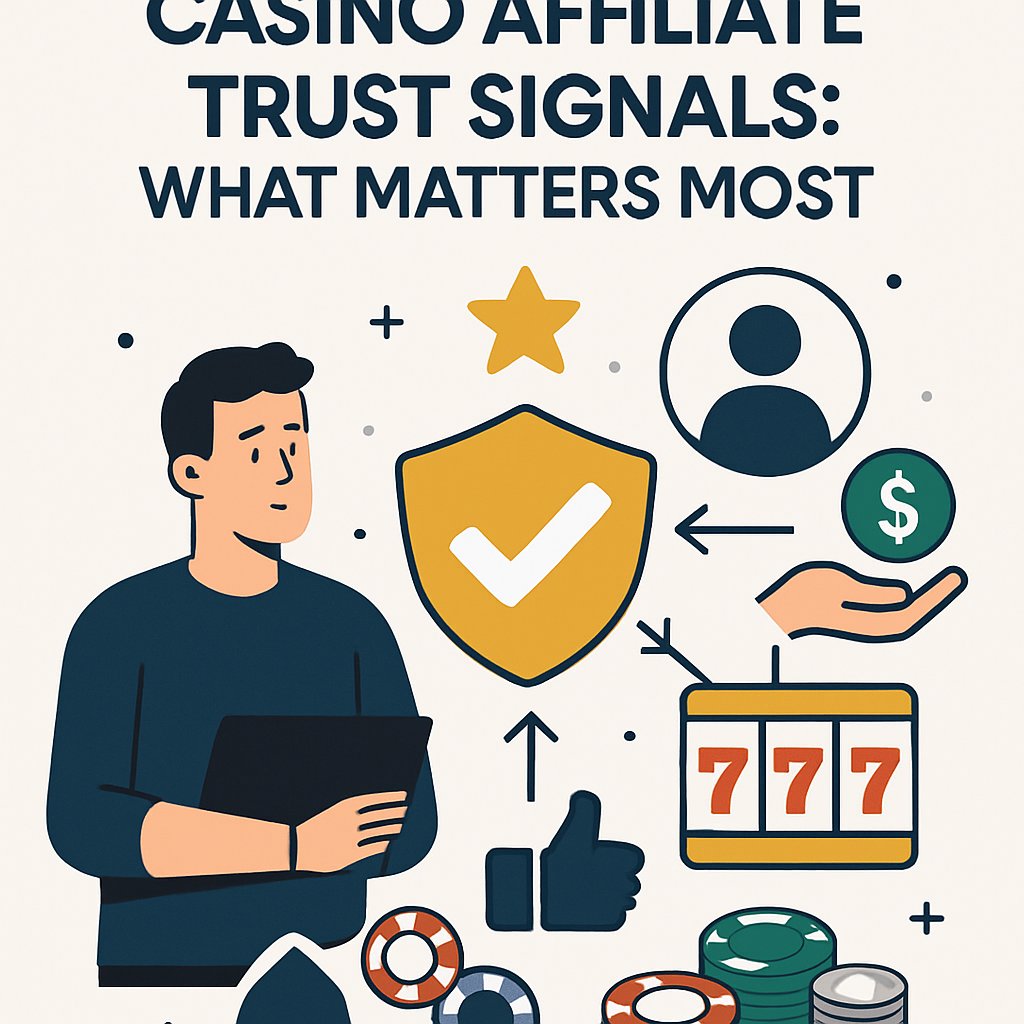
The most important trust signals are licensing transparency, accurate bonus terms, responsible gambling messaging, and proof of real review quality.
Licensing and jurisdiction details tell users the operator is regulated, while clear terms prevent disputes over wagering, max bets, and withdrawal limits. Responsible gambling links show you are not ignoring player protection, which matters for compliance and brand reputation. Review quality is also critical: original screenshots, clear pros and cons, and honest comparisons outperform generic sales copy.
For search engines, structured data, author credentials, and updated timestamps help reinforce topical authority. For users, visible customer support details and payment information reduce uncertainty. In affiliate marketing, trust is cumulative; one weak signal can undo several strong ones.
Example: a comparison page with a “best for fast withdrawals” label should explain what “fast” means, such as same-day e-wallet processing.
Action item: prioritize the top four trust signals on every money page.
Hey Google, how do I fix low trust and poor conversions on my casino affiliate pages?
Fix low trust by improving accuracy, reducing friction, and aligning your content with what users actually want.
Start by checking whether your bonus details, licensing info, and payment methods are current. Then review page speed, mobile layout, and CTA placement, because poor usability can look like poor credibility. Add comparison tables, FAQs, and clear disclosures so users do not have to hunt for basic information. If conversions are weak, test whether your traffic source matches the landing page intent; mismatched traffic often creates low-quality clicks.
Also inspect your analytics. High bounce rates and short time on page usually indicate a trust or relevance problem. In regulated markets, even small wording mistakes can reduce confidence, especially if you overpromise payouts or bonuses.
Example: replacing “huge guaranteed wins” with “licensed casino with 24/7 support and clear terms” usually improves response quality.
Action item: run a full page audit, then A/B test headlines, CTAs, and bonus presentation.
Conclusion
Casino affiliate success depends on trust, accuracy, and consistency. If your content is transparent, compliant, and regularly updated, you are more likely to earn clicks, deposits, and stronger operator relationships. Bankrolls.com helps affiliates manage and optimize this process with better tracking, reporting, and revenue visibility, making it easier to identify what builds trust and what hurts performance. Use it to monitor campaigns, improve ROI, and scale with confidence. Sign up for Bankrolls today
Bankrolls AI
AI-powered content generation for casino affiliate marketing insights.